

What materials are used to make CAT rock tip?
Sep 05, 2025
Hey there! As a supplier of CAT rock tips, I often get asked about what materials are used to make these bad boys. Well, let's dive right into it.
The Basics of CAT Rock Tips
First off, CAT rock tips are super important in heavy - duty industries like mining, construction, and quarrying. They're attached to the buckets of excavators, loaders, and other heavy machinery. Their main job is to break through tough rocks, soil, and other hard materials. So, the materials used to make them need to be top - notch, tough, and durable.
High - Carbon Steel
One of the most common materials used for CAT rock tips is high - carbon steel. High - carbon steel is known for its high strength and hardness. It contains more carbon than regular steel, usually between 0.6% and 1.5%. This extra carbon gives it the ability to withstand high levels of stress and wear.
When we're talking about heavy - duty applications, high - carbon steel is a go - to because it can be heat - treated to further enhance its properties. Heat treatment involves heating the steel to a specific temperature and then cooling it rapidly. This process can make the steel even harder and more resistant to deformation. For example, in a quarry where large rocks need to be broken down, a CAT rock tip made of high - carbon steel can handle the constant impact and abrasion. You can check out the Caterpillar J250 1U3252WTL Tooth, which is likely made with high - quality high - carbon steel to perform well in these tough environments.
Alloy Steel
Alloy steel is another popular material for CAT rock tips. Alloy steel is made by adding other elements like chromium, nickel, molybdenum, and vanadium to the basic steel composition. These additional elements give alloy steel unique properties that make it suitable for different applications.
Chromium, for instance, improves the steel's corrosion resistance and hardness. Nickel enhances toughness and ductility, which means the rock tip can bend a little without breaking under stress. Molybdenum increases the steel's strength at high temperatures and also improves its wear resistance. Vanadium helps in refining the grain structure of the steel, making it stronger and more wear - resistant.
An example of a product that might use alloy steel is the 4T2203 HD Abrasion Teeth Fits CAT. The "HD" in its name stands for high - density, which implies that it's made of a material that can handle a lot of abrasion. Alloy steel is a great choice for such a product because of its enhanced properties compared to regular steel.
Tungsten Carbide
Tungsten carbide is a super - tough material that's often used in the tips of CAT rock tips. Tungsten carbide is made by combining tungsten and carbon at high temperatures. It's extremely hard, even harder than high - carbon steel and many alloy steels.
The hardness of tungsten carbide makes it ideal for applications where there's a lot of abrasion. For example, when a rock tip is constantly scraping against hard rocks, the tungsten carbide tip can resist wear much better than other materials. It also has good heat resistance, which is important because the friction generated during the digging process can heat up the rock tip.
However, tungsten carbide is a bit brittle compared to steel. So, it's usually used in combination with steel. The steel body of the rock tip provides the necessary toughness, while the tungsten carbide tip provides the hardness and wear resistance. You can find this combination in products like the 144 - 1358 HD Rock Chisel Teeth, where the tip is likely made of tungsten carbide for maximum performance.
Cast Iron
Cast iron is also used in some CAT rock tips, especially in applications where cost is a major factor. Cast iron is made by melting iron and adding small amounts of carbon and silicon. It's relatively easy to cast into different shapes, which makes it a cost - effective option for manufacturing rock tips.
There are different types of cast iron, such as gray cast iron, white cast iron, and ductile cast iron. Gray cast iron is known for its good damping capacity, which means it can absorb vibrations. White cast iron is very hard and wear - resistant but is also quite brittle. Ductile cast iron has a combination of strength and ductility, making it a good choice for some rock tip applications.
However, compared to high - carbon steel, alloy steel, and tungsten carbide, cast iron may not be as durable in extremely harsh environments. But for less demanding applications, it can still do the job well.
Heat - Treated Alloys
Heat - treated alloys are a special type of material that combines the benefits of alloy steel and heat treatment. These alloys are carefully formulated with specific elements and then heat - treated to achieve the desired properties.
Heat - treated alloys can have a high strength - to - weight ratio, which is important for heavy - machinery applications. They can also be tailored to have different levels of hardness, toughness, and wear resistance depending on the specific requirements of the CAT rock tip. For example, in a mining operation where the rock tip needs to break through different types of rocks, a heat - treated alloy can be designed to perform well in all those scenarios.
The Manufacturing Process
The choice of material also depends on the manufacturing process. Different materials require different manufacturing techniques. For example, high - carbon steel and alloy steel can be forged, which involves shaping the metal by applying pressure. Forging can improve the grain structure of the steel, making it stronger and more uniform.
Tungsten carbide is usually made by powder metallurgy. This process involves mixing tungsten and carbon powders, pressing them into shape, and then sintering them at high temperatures. Cast iron, as mentioned earlier, is made by casting, which is a relatively simple and cost - effective process.
Quality Control
As a supplier, we take quality control very seriously. We test the materials used in our CAT rock tips to ensure they meet the required standards. We use techniques like hardness testing, tensile testing, and impact testing to check the mechanical properties of the materials.
We also perform non - destructive testing methods like ultrasonic testing and magnetic particle testing to detect any internal defects in the rock tips. This ensures that our products are reliable and can perform well in the field.
Why Choose Our CAT Rock Tips
Our CAT rock tips are made with the best materials available. Whether it's high - carbon steel, alloy steel, tungsten carbide, or heat - treated alloys, we source the materials from trusted suppliers. We have a team of experts who are constantly researching and developing new materials and manufacturing processes to improve the performance of our rock tips.
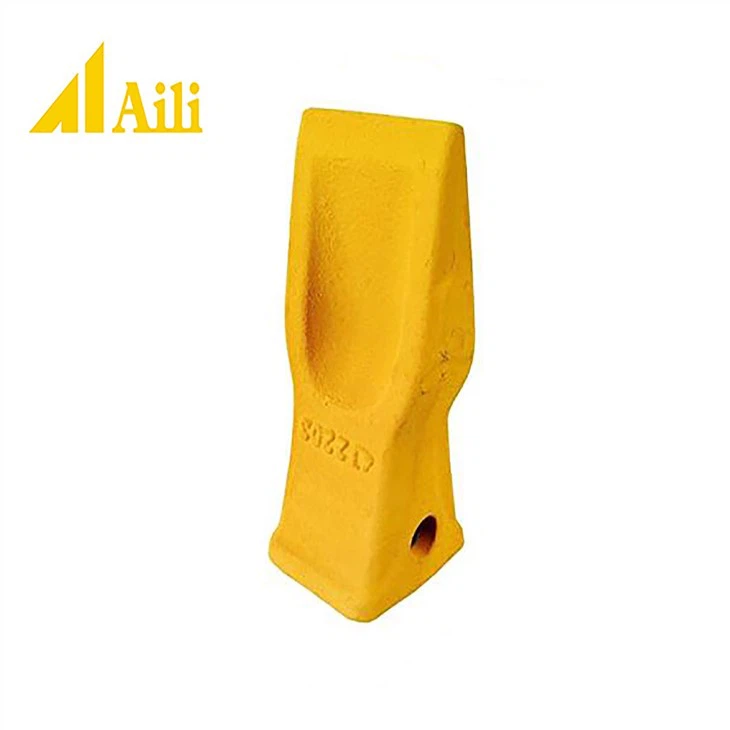

We understand that different customers have different needs. So, we offer a wide range of CAT rock tips to suit various applications. Whether you're in the mining industry, construction, or quarrying, we have a rock tip that's right for you.
Let's Talk
If you're in the market for high - quality CAT rock tips, I'd love to have a chat with you. We can discuss your specific requirements and find the best solution for your business. Don't hesitate to reach out for a quote or to ask any questions you might have. We're here to help you get the most out of your heavy - machinery equipment.
References
- ASM Handbook Committee. (2008). ASM Handbook, Volume 1: Properties and Selection: Irons, Steels, and High - Performance Alloys. ASM International.
- Callister, W. D., & Rethwisch, D. G. (2014). Materials Science and Engineering: An Introduction. Wiley.