
What is the power consumption when using the J250 rock tip?
Jan 16, 2026
Hey there! As a supplier of the J250 rock tip, I often get asked about its power consumption. It's a crucial question, especially for those in the construction and mining industries where every bit of energy efficiency matters. So, let's dive right into it and figure out what the power consumption looks like when using the J250 rock tip.
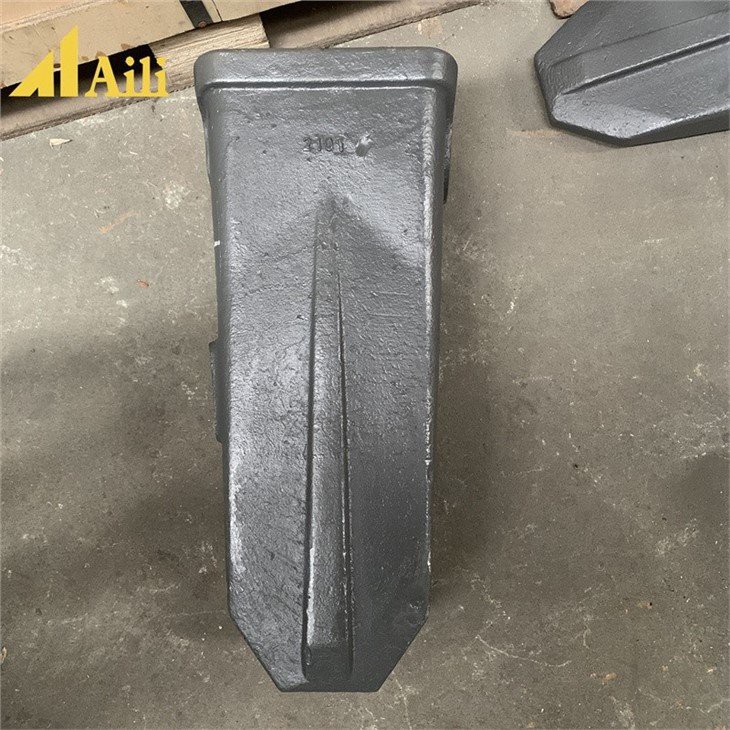
First off, to understand the power consumption, we need to know a bit about the J250 rock tip itself. The J250 is a high - performance rock tip designed to handle tough jobs. It's made with top - notch materials that can withstand the wear and tear of breaking through hard rocks. Whether you're working on a large - scale mining project or a small construction site, the J250 is up for the challenge.
The power consumption of the J250 rock tip isn't a standalone figure. It's closely related to the equipment it's attached to. Usually, the J250 is used with hydraulic hammers or breakers. These machines are the ones that provide the power to drive the rock tip into the rock. The power consumption of the entire setup depends on several factors.
One of the main factors is the size and power rating of the hydraulic hammer. A larger, more powerful hammer will generally consume more energy. For example, if you're using a small - scale hydraulic hammer with a power rating of around 5 - 10 kilowatts, the overall power consumption when using the J250 will be relatively low. On the other hand, if you pair it with a heavy - duty hydraulic hammer with a power rating of 50 kilowatts or more, the power consumption will shoot up.
Another factor is the hardness of the rock. When the J250 is working on softer rocks, the hydraulic hammer doesn't have to work as hard. This means less power is consumed. But when it comes to extremely hard rocks, like granite or basalt, the hammer has to exert more force, leading to higher power consumption.
The operating pressure also plays a big role. The hydraulic system needs to maintain a certain pressure to make the J250 work effectively. If the pressure is set too high, it will increase the power consumption. However, if the pressure is too low, the J250 might not be able to break through the rock properly, which could lead to inefficient operation and potentially more power being wasted in the long run.
Let's talk about some real - world scenarios. In a typical construction site where the J250 is used to break up concrete slabs, the power consumption might be relatively moderate. The concrete isn't as hard as some natural rocks, so the hydraulic hammer doesn't have to work overtime. On average, with a mid - sized hydraulic hammer, you might see a power consumption of around 15 - 20 kilowatt - hours per hour of continuous operation.
But in a mining environment, where the J250 is used to break large boulders of hard rock, the story is different. The power consumption can easily double or even triple. With a high - power hydraulic hammer, you could be looking at 30 - 60 kilowatt - hours per hour of operation.
Now, you might be thinking, "Is there any way to reduce the power consumption when using the J250?" Well, there are a few things you can do. First, make sure the hydraulic system is properly maintained. A well - maintained system will operate more efficiently, reducing power waste. Second, choose the right hydraulic hammer for the job. Don't use an oversized hammer for a small - scale task, as it will consume more power than necessary.
Also, adjusting the operating parameters correctly can make a big difference. Work with an experienced operator who can set the right pressure and frequency for the specific rock type. This way, the J250 can work at its optimal level, using the least amount of power possible.
When it comes to our product range, we also offer other great options like the 4T2353 Abrasion Teeth. These teeth are designed for high - abrasion applications and can be a great addition to your equipment. Another option is the J550 HD Long Tip 9N4352, which offers excellent durability and performance. And if you're looking for something specific for certain models, the J600 E365/375 Casting Teeth For 6i6602RC might be just what you need.
If you're in the market for high - quality rock tips and related products, we're here to help. We understand the importance of power efficiency and performance in your operations. Whether you have questions about the J250 rock tip, its power consumption, or any of our other products, feel free to reach out. We're always happy to have a chat and discuss how our products can meet your needs. So, don't hesitate to contact us for more information and to start a purchase negotiation.
References:

- Industry reports on hydraulic hammer and rock tip performance
- In - house testing data on the J250 rock tip and related equipment