

How to check if bucket teeth are worn out?
Aug 08, 2025
Hey there! I'm a supplier of bucket teeth, and today I wanna chat about how to check if bucket teeth are worn out. Bucket teeth are super important parts of an excavator. They're on the front line, taking on all the tough work of digging, scooping, and moving all kinds of materials. Over time, they're bound to wear down. Knowing how to spot worn - out bucket teeth can save you a lot of trouble and money in the long run.
Visual Inspection
The first and easiest way to check for wear is through a visual inspection. Just take a good look at the bucket teeth. Start by looking at the tip. A brand - new bucket tooth has a sharp, well - defined tip. As it gets used, the tip will start to round off. If the tip has become really blunt and looks more like a flat surface than a point, it's a clear sign of wear.
Another thing to look for is cracks. Cracks can form on the surface of the bucket teeth due to the high stress they endure during operation. These cracks can start small but can quickly grow and lead to the tooth breaking off. Check the entire surface of the tooth, including the sides and the back. If you see any visible cracks, no matter how small, it's a red flag.
Also, take a look at the overall shape of the tooth. If it's starting to look misshapen, like it's bending or warping, that's a sign that it's been under too much stress and is likely worn out. Sometimes, you might even notice chunks missing from the tooth. This can happen when the tooth hits something really hard, like a rock, and pieces break off.
Measuring the Tooth
Visual inspection is a great start, but sometimes you need to be more precise. That's where measuring comes in. You can use a simple measuring tool like a caliper to measure the key dimensions of the bucket tooth.
First, measure the length of the tooth. As the tooth wears down, its length will decrease. Compare the current length with the original length of a new tooth. If it's significantly shorter, say more than 10 - 15% shorter, it's probably time to replace it.
Next, measure the width of the tip. A worn - out tip will be wider than a new one. Measure the width at the very end of the tip and compare it to the specifications of a new tooth. If the width has increased by a noticeable amount, the tooth is likely worn.
You can also measure the thickness of the tooth at different points. A worn tooth will generally be thinner in areas where it has been in contact with the material being excavated. Measure the thickness near the tip and at the base of the tooth. If there's a big difference in thickness compared to a new tooth, it's a sign of wear.

Performance Check
How the excavator is performing can also tell you a lot about the condition of the bucket teeth. If you notice that the excavator is having a harder time digging, it could be because the bucket teeth are worn out. A worn - out tooth won't be able to penetrate the material as easily as a new one, so the machine will have to work harder.
You might also notice that the bucket isn't filling up as quickly as it used to. This could be because the worn teeth aren't grabbing and holding the material as effectively. Another sign is an increase in fuel consumption. When the excavator has to work harder due to worn bucket teeth, it uses more fuel.
If you hear strange noises during operation, like a rattling or clunking sound, it could be a sign that the bucket teeth are loose or worn. Loose teeth can move around while the excavator is working, causing these noises.
Comparing with New Teeth
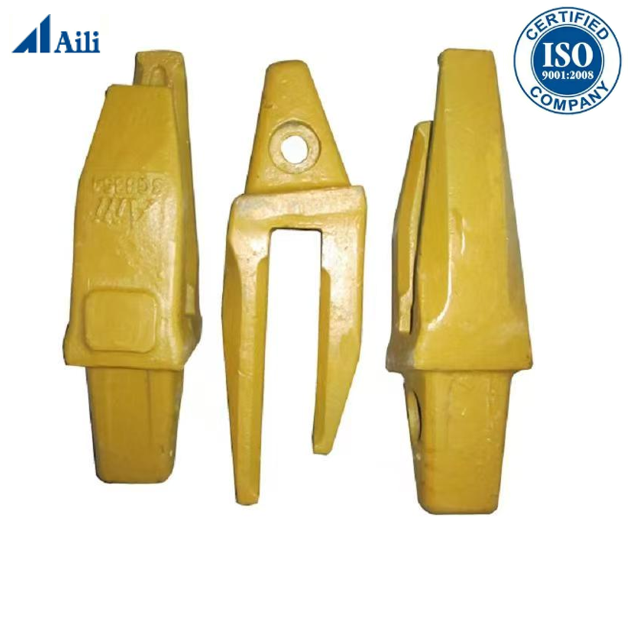
If you have a new bucket tooth on hand, it can be really helpful to compare it with the ones that are currently in use. Place the new tooth next to a used one and look at them side by side. This can make it much easier to spot the differences in shape, size, and wear.
You can see how the new tooth has a sharp tip and a well - defined shape, while the used one might be dull and misshapen. This comparison can give you a clear idea of how much wear the used tooth has experienced.
When to Replace
So, when should you actually replace the bucket teeth? Well, it depends on a few factors. If you've noticed significant wear through visual inspection, like a very blunt tip, large cracks, or chunks missing, it's definitely time to replace the tooth.
If the measurements show that the tooth has lost a significant amount of its length, width, or thickness, replacement is also in order. And if the performance of the excavator has deteriorated, like it's struggling to dig or using more fuel, it's a good indication that the bucket teeth need to be changed.
Our Product Recommendations
As a bucket teeth supplier, I'd like to recommend some of our great products. We have the Excavator Spare Part Bucket Teeth For DH220 - 5, which are designed to fit perfectly on DH220 - 5 excavators. These teeth are made from high - quality materials and are built to last.
Another great option is the 2713 - 1217RC DH220 - 5 RC Tooth. It offers excellent performance and durability, ensuring that your excavator can work efficiently for a long time.
We also have the 3G8354/E320 - 40 Vertical Adapter, which is a great addition to your bucket teeth setup. It helps to improve the overall performance of the bucket and the teeth.
If you're in the market for new bucket teeth or have any questions about checking the wear of your current ones, don't hesitate to reach out. We're here to help you make the right decision for your excavator. Whether you're a small - scale contractor or a large construction company, we have the products and expertise to meet your needs. Contact us to start a conversation about your bucket teeth requirements and let's work together to keep your excavator running smoothly.
References
- "Excavator Maintenance Handbook"
- Manufacturer's guidelines for bucket teeth
- Industry reports on excavator parts performance