

How does the angle of a rock chisel tip affect its use?
Dec 12, 2025
Hey there! As a supplier of rock chisel tips, I've seen firsthand how crucial the angle of these tips can be. Rock chisels are used in so many different industries, from construction to mining, and the right tip angle can make a huge difference in how well they work.
First off, let's talk about what the angle of a rock chisel tip actually means. The tip angle is the angle formed between the two cutting edges of the chisel. It's usually measured in degrees, and different applications call for different tip angles.
One of the most common tip angles you'll come across is the acute angle. Acute - angled chisel tips typically have an angle of less than 90 degrees. These tips are super sharp, and they're great for tasks that require precision and a high - impact fracture. For example, if you're working on delicate stone carving, an acute - angled chisel tip allows you to make fine cuts and intricate details. In the mining industry, they're also used when you need to break small, hard rock fragments. The sharp point can penetrate the rock easily, creating stress points that lead to more effective fracturing. If you're looking for some high - quality acute - angled rock chisel tips like the 135 - 9400 HD Rock Chisel Teeth, we've got them in stock.
On the other side of the spectrum, we have obtuse - angled chisel tips. These tips have an angle greater than 90 degrees. Obtuse - angled tips are more durable and better at distributing force over a larger area. In construction, when you're working on heavy - duty tasks like breaking up large concrete slabs or massive rock boulders, an obtuse - angled tip is your best bet. The broader tip spreads the impact force, reducing the chance of the tip breaking or chipping. It also makes it easier to get through thick layers of material without getting stuck.
But why are these differences so important? Well, it all boils down to efficiency and cost - effectiveness. Using the wrong tip angle can lead to a whole lot of problems. If you use an acute - angled tip for a heavy - duty job, it'll wear out quickly, and you'll end up replacing it frequently. This not only costs you more money in the long run but also slows down your work. On the other hand, if you use an obtuse - angled tip for a precision task, you won't be able to get the fine details you need, and you might end up damaging the material you're working on.
Let's take a closer look at some real - world scenarios. In road construction, workers often need to break up old asphalt and concrete. An obtuse - angled rock chisel tip is ideal here. The wider tip can handle the large - scale force needed to break up the tough road surface. It can be paired with heavy machinery to increase productivity. And when it comes to the teeth for these machines, types like the 6Y0352 Excavator Bucket Tooth 977,D5, D6,D7,983 Ripper Teeth are designed to work efficiently in such heavy - weight applications.
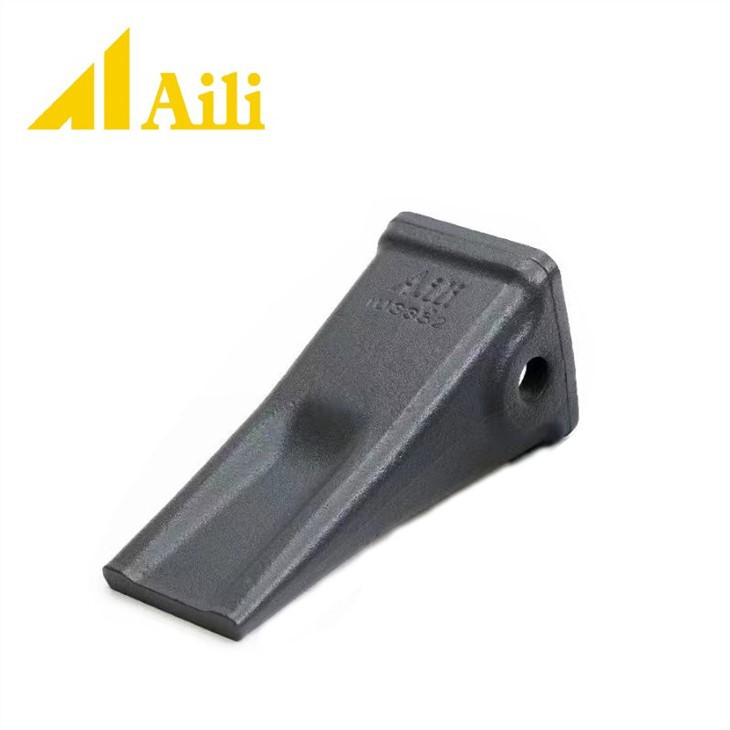
Now, in the art of stone sculpture, an artist needs to be extremely precise. Acute - angled chisel tips are essential. They allow the artist to create smooth curves, sharp edges, and detailed patterns. A single wrong move with a blunt or an improper - angled tip can ruin hours of work. Fine - tuned tools like 1U3352 Caterpillar J350 Long Tooth can offer the kind of precision required in such delicate work.
Another factor that affects the choice of tip angle is the hardness of the material you're working with. Softer materials like sandstone or clay can often be worked with a wider range of tip angles. However, extremely hard materials like granite or basalt require a more careful selection. For hard rocks, an obtuse - angled tip may initially be used to break the large chunks, and then an acute - angled tip can be used for the finishing touches. This two - step approach maximizes the efficiency of the chiseling process.
The angle of a rock chisel tip also influences the force required to use it. A sharper, acute - angled tip requires less force to penetrate the material because it concentrates the force on a smaller area. This makes it easier to start the chiseling process, especially in hard materials. But as the tip starts to wear, the force required may increase. In contrast, an obtuse - angled tip requires more initial force to start working, but it can maintain a more consistent force distribution throughout the chiseling process.
When it comes to maintenance, the tip angle plays a role here too. Acute - angled tips are more prone to chipping and dulling, so they need to be sharpened more frequently. Obtuse - angled tips, while more durable, still require regular maintenance to ensure they're working at their best. We offer a range of rock chisel tips that are made from high - quality materials, which means they'll last longer and require less frequent maintenance.

In conclusion, the angle of a rock chisel tip is a critical factor that can significantly impact its performance. Whether you're in the construction industry, mining, or the arts, choosing the right tip angle can save you time, money, and a lot of headaches. If you're interested in learning more or making a purchase, we'd love to talk to you. Don't hesitate to reach out to us for more information on our wide range of rock chisel tips and other related products.
References
- Engineering Principles of Construction Equipment by J. Yoder
- Handbook of Stone Masonry Techniques by M. Johnson
- Mining Equipment Operation and Maintenance Guide by P. Smith